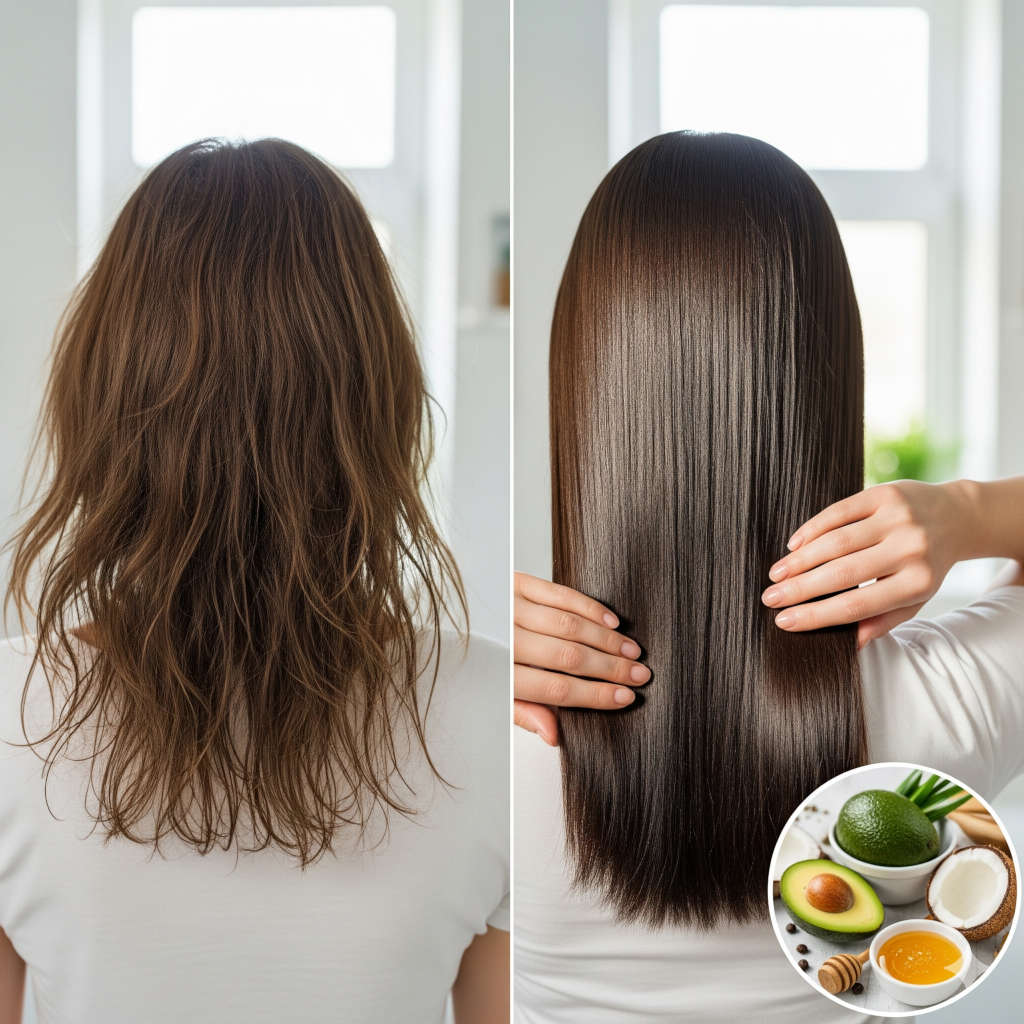
There’s nothing quite as frustrating as spending time styling your hair in the morning, only to step outside and watch it transform into a frizzy, unmanageable mess. Many people in the UK are familiar with this struggle. Between the damp climate, cold winds in winter, and the high mineral content of our hard water in many regions, our hair has to deal with constant challenges. The result? Strands that feel rough, look dull, and refuse to stay sleek, no matter how much effort you put in.
The temptation is often to reach for expensive salon treatments or load up on silicone-heavy serums that promise instant shine. But while they may give a quick fix, they don’t always address the root of the problem. Over time, relying on chemical products can actually make dryness and frizz worse. The good news is that you don’t always need to spend a fortune or resort to harsh treatments. Nature provides plenty of effective, safe, and affordable ways to restore softness and shine — and most of them can be found in your kitchen cupboard or local supermarket.
In this guide, we’ll look at why hair becomes dry and frizzy, how daily habits and environmental factors play a role, and which home remedies genuinely work. Along the way, we’ll also touch on recommended natural hair products available in the UK that complement these remedies, so you can build a routine that feels realistic and sustainable.
Why Does Hair Become Dry and Frizzy?
To understand how to fix the problem, it helps to know what’s actually happening inside your hair.
Hair is made up of three layers: the cuticle (outer protective layer), the cortex (the middle layer that contains pigment and strength), and the medulla (the core, which is often absent in finer hair). When your cuticle lies flat and smooth, light reflects off it and the strand appears shiny. But when it lifts or becomes damaged, hair looks rough, feels dry, and allows moisture from the air to seep in — this is what creates frizz.
Several factors common to life in the UK contribute to this:
- Weather and humidity: Our famously damp climate means frizz is a constant companion. In summer, humidity makes hair swell, while in winter, cold winds strip it of moisture.
- Hard water: Many parts of the UK, particularly in the South East, London, and Midlands, have hard water high in calcium and magnesium. Over time, these minerals coat the hair shaft, leaving it dry, stiff, and difficult to manage.
- Heat and chemical styling: Regular blow-drying, straightening, bleaching, and colouring weaken the hair structure and strip it of natural oils.
- Lifestyle and diet: Dehydration, lack of healthy fats, and nutrient deficiencies can show up directly in your hair. Stress also has a role, as it affects hormone balance and scalp health.
Recognising which of these factors are affecting you is the first step in repairing your hair naturally.
Everyday Habits That Make a Difference
Before diving into homemade masks and oils, it’s worth adjusting a few daily habits that may be contributing to the problem. Even small tweaks can make a huge difference over time.
Start with how you wash your hair. If you’re shampooing every day, you may be doing more harm than good. Frequent washing strips away sebum, the natural oil your scalp produces to keep strands soft. Most people with dry or frizzy hair benefit from washing just two or three times a week, using a gentle, sulphate-free shampoo. UK brands such as Faith in Nature Coconut Shampoo or Kind Natured Nourishing Shampoo are affordable, widely available in Boots and Holland & Barrett, and much kinder on your hair than harsh supermarket brands.
Water temperature also matters. While a steaming hot shower might feel heavenly on a cold morning, it raises the cuticle layer and dries the hair out. Switch to lukewarm water when washing, and give your hair a final rinse with cool water to help seal the cuticle down.
Another overlooked factor is how you dry your hair. Rubbing it vigorously with a cotton towel roughens the cuticle, creating frizz before you’ve even styled it. Try blotting instead with a microfibre towel or even an old cotton T-shirt, which is far gentler.
Finally, look at how you’re sleeping. Tossing and turning on a cotton pillowcase creates friction that causes breakage and morning frizz. Swapping to a silk or satin pillowcase — now widely available in the UK from brands like Slip or more budget-friendly options on Amazon — can make a noticeable difference.
Natural Home Remedies That Work
When it comes to tackling dryness and frizz, natural ingredients can be surprisingly powerful. They work by replenishing lost moisture, nourishing the hair shaft, and smoothing down the cuticle. Here are some remedies that have stood the test of time and are easy to try at home.
Coconut Oil Overnight Treatment
Coconut oil has long been a favourite in natural hair care, and for good reason. Unlike many other oils, its fatty acid composition allows it to penetrate the hair shaft rather than simply coating the surface. This means it moisturises from the inside out while also providing a protective seal on the outside.
To use, warm a small amount between your palms and massage it into your scalp, working it down to the ends. Cover your hair with a shower cap or wrap it in a towel and leave it overnight. Wash it out with a gentle shampoo in the morning. Doing this once a week can transform brittle, frizzy strands into silky lengths.
If you’re looking for a good option in the UK, KTC 100% Pure Coconut Oil is inexpensive and widely available in supermarkets.
Olive Oil and Honey Hydrating Mask
For centuries, Mediterranean cultures have used olive oil as a beauty treatment, and its benefits for dry hair are undeniable. When paired with honey — a natural humectant that draws moisture from the air into your hair — it becomes a powerful conditioning treatment.
Simply mix two tablespoons of extra virgin olive oil with a tablespoon of raw honey, apply it evenly to damp hair, and leave it on for about half an hour before rinsing with lukewarm water. The result is hair that feels softer, smoother, and far less frizzy.
Avocado and Yogurt Repair Mask
Avocados aren’t just good for your morning toast; they’re also packed with vitamins A, D, and E, along with natural oils that deeply nourish the hair shaft. Blended with yogurt, which contains lactic acid to gently cleanse the scalp while moisturising, this mask is ideal for repairing severely dry hair.
Mash one ripe avocado and mix it with a few tablespoons of plain yogurt until smooth. Apply to your hair, focusing on the ends, and leave for 20 to 30 minutes before rinsing. This treatment adds both strength and softness, making it particularly useful if your hair is damaged from colouring or heat styling.
Aloe Vera Gel for Frizz Control
Aloe vera is often associated with soothing sunburn, but it’s just as effective for calming unruly hair. It contains enzymes and amino acids that moisturise and smooth the cuticle, making it an excellent natural alternative to store-bought anti-frizz serums.
Extract the gel from a fresh aloe vera leaf if you have one, or use pure aloe vera gel from health shops like Holland & Barrett. Apply it lightly to damp hair, concentrating on the ends, and leave it for 20 minutes before rinsing. It leaves hair softer, shinier, and easier to manage.
Apple Cider Vinegar Rinse
If you live in a hard-water area of the UK, an apple cider vinegar rinse could be a game-changer. Hard water leaves mineral deposits on the hair, making it feel rough and dull. Apple cider vinegar helps to dissolve these deposits, restore your hair’s natural pH balance, and smooth the cuticle for a shinier finish.
Mix two tablespoons of raw, unfiltered apple cider vinegar with a cup of water. After shampooing, pour the mixture over your hair, let it sit for a couple of minutes, and rinse with cool water. Used once every week or two, it can keep your hair feeling fresh and manageable. Look for Aspall Organic Apple Cider Vinegar, which is widely sold in UK supermarkets.
Banana and Honey Smoothing Mask
Bananas are rich in potassium and natural oils, making them particularly good for softening coarse, dry hair. Combined with honey, they create a deeply hydrating treatment.
Blend one ripe banana with a tablespoon of honey until smooth, apply to your hair, and leave it for half an hour. The result is silky, smooth hair that resists frizz even in damp conditions.
Shea Butter for Daily Use
If you’re looking for something to apply between washes to keep ends smooth, shea butter is a fantastic choice. Rich in fatty acids and vitamins, it acts like a natural leave-in conditioner. A pea-sized amount melted between your palms can be smoothed over dry ends to prevent frizz.
Raw, unrefined shea butter is widely available online in the UK and lasts a long time, making it a cost-effective addition to your routine.
Supporting Hair Health from the Inside Out
External remedies are only half the story. Hair health reflects what’s going on inside your body too. If your diet is lacking in key nutrients, no amount of coconut oil or avocado masks will completely solve the problem.
Make sure you’re drinking enough water, especially if you consume lots of tea and coffee, which can be dehydrating. Aim for at least six to eight glasses of water a day. Incorporating herbal teas like chamomile or green tea also counts towards hydration.
From a nutritional perspective, focus on foods rich in omega-3 fatty acids, such as salmon, mackerel, chia seeds, and walnuts. These help to keep the scalp moisturised and the hair shaft strong. Protein is equally important, since hair is made up largely of keratin. Include eggs, beans, lentils, and lean meats regularly in your meals. Iron, zinc, and vitamin E are other essential nutrients that directly impact hair strength and shine.
If you feel your diet is lacking, you could consider supplements. Many UK brands such as Vitabiotics Perfectil Hair offer targeted formulas for hair health, though it’s always wise to check with a GP before starting new supplements.
Building a Natural Hair Care Routine
The key to success with natural remedies is consistency. One treatment won’t magically transform your hair overnight, but a routine built around gentle care and regular nourishment will show results over time.
A simple weekly schedule might look like this: an overnight coconut oil treatment on Sunday, an aloe vera application mid-week, and a hydrating mask with avocado or banana towards the weekend. In between, wash with a sulphate-free shampoo, follow with a nourishing conditioner, and finish with an apple cider vinegar rinse every other week if you’re in a hard-water area.
This rhythm gives your hair regular moisture without overwhelming it, and by sticking with it for a few months you’ll notice a visible improvement in shine, softness, and manageability.
When to Seek Professional Advice
While most cases of dryness and frizz can be improved with natural remedies and better daily care, sometimes persistent hair issues are a sign of something deeper. If you notice sudden, severe dryness, excessive shedding, or changes in hair texture that don’t improve with home care, it’s worth consulting a GP or a trichologist (a hair and scalp specialist). Conditions such as thyroid imbalances, iron deficiency, or hormonal changes can all affect hair health.
Final Thoughts
Dealing with dry and frizzy hair in the UK can feel like a never-ending battle, but it doesn’t have to be. By understanding the role our climate, water quality, and habits play, and by leaning on natural remedies that truly work, you can bring your hair back to life. Whether it’s the deep nourishment of coconut oil, the frizz-taming magic of aloe vera, or the shine-boosting power of apple cider vinegar, nature offers everything you need for healthier hair.
With a little consistency, patience, and the right mix of treatments, you can swap dull, brittle strands for soft, manageable hair that looks and feels healthier every day.