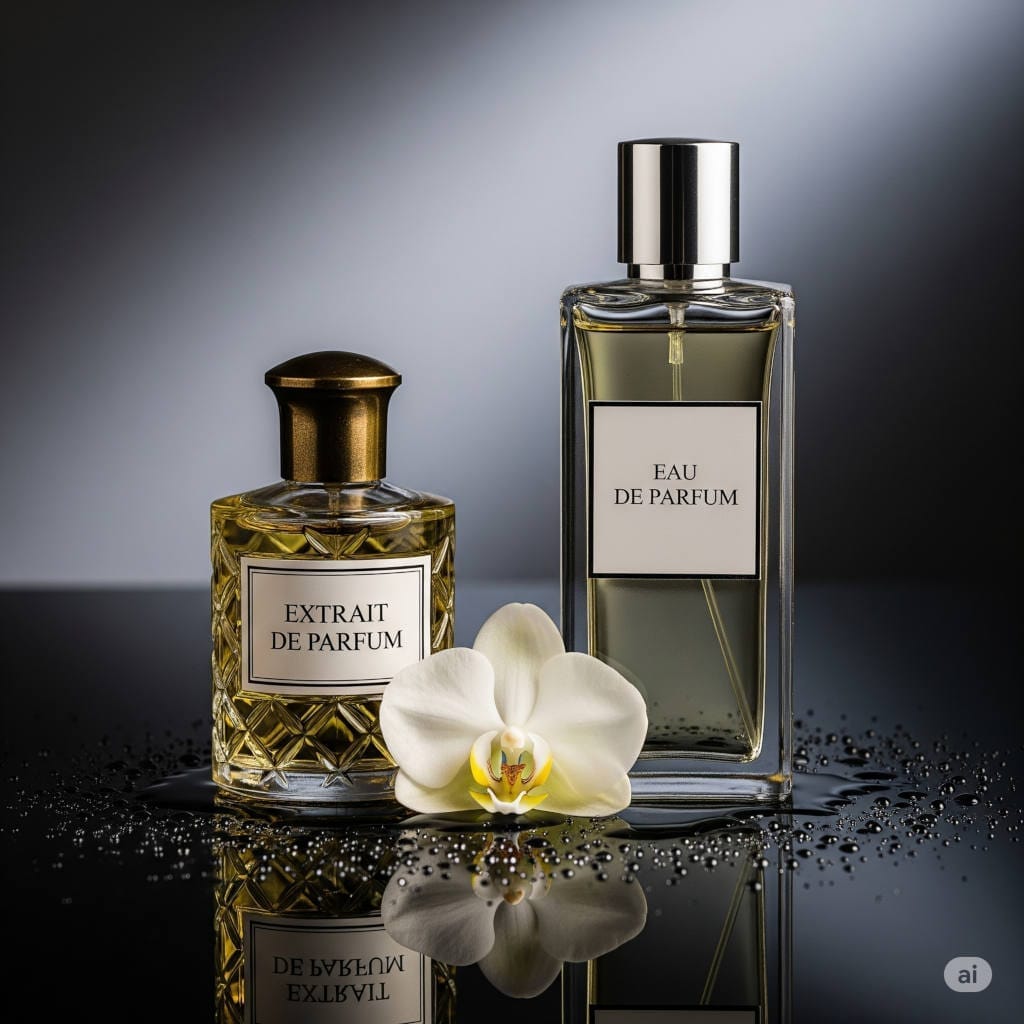
Perfume is one of the most personal luxuries in the world. It’s invisible, yet unforgettable. It can lift your mood, spark memories, and even shape the way people remember you. But with so many different fragrance types on the market—Eau de Toilette, Eau de Parfum, Extrait de Parfum, and more—it’s easy to get confused.
Two of the most talked-about (and often misunderstood) perfume concentrations are Extrait de Parfum and Eau de Parfum. They sound similar, they’re both high quality, and many people assume they’re just different names for the same thing. But in reality, there are clear differences in concentration, scent development, projection, and even how you should wear them.
If you’ve ever wondered Which one is better for me? or Why does the same perfume smell different in these two versions?, this guide will give you every detail you need—minus the confusing jargon.
The Basics: What Do These Terms Actually Mean?
When you see “Extrait de Parfum” or “Eau de Parfum” on a bottle, you’re looking at the fragrance’s oil concentration level—the percentage of actual perfume oils in the mixture compared to alcohol and water.
Perfume isn’t just a bottle of essential oils. It’s a carefully crafted blend of:
- Perfume oils (aroma molecules, natural extracts, or synthetic compounds)
- Alcohol (to dilute and help with evaporation)
- Sometimes water (to adjust strength)
- Other fixatives (to help the scent last longer)
The ratio of these ingredients determines:
- How intense the scent smells
- How long it lasts on your skin
- How far it projects (sillage)
Quick Concentration Chart
| Type of Fragrance | Perfume Oil Concentration | Average Longevity | Projection |
|---|---|---|---|
| Eau Fraîche | 1–3% | 1–2 hours | Very light |
| Eau de Cologne (EdC) | 2–5% | 2–3 hours | Light |
| Eau de Toilette (EdT) | 5–15% | 3–5 hours | Moderate |
| Eau de Parfum (EdP) | 15–20% | 4–8 hours | Strong |
| Extrait de Parfum | 20–40% | 6–12+ hours | Softer, closer |
What Is Extrait de Parfum?
Extrait de Parfum—sometimes called Parfum, Perfume Extract, or Pure Perfume—is the most concentrated form of perfume you can buy. It typically contains 20–40% perfume oils, with the rest being alcohol and a very small amount of water (if any).
How It Feels and Smells
- Rich & deep – The scent is denser, more rounded, and often more sensual.
- Slower evolution – It unfolds on your skin gradually, with each stage lasting longer.
- Subtle projection – Unlike the perfume “cloud” of an Eau de Parfum, Extrait tends to stay closer to you. People will notice it when they’re near you, but it won’t fill the room.
- Luxurious experience – Often packaged in small, elegant bottles with dabbers instead of sprays.
What Is Eau de Parfum?
Eau de Parfum (EdP) sits just below Extrait in concentration, containing 15–20% perfume oils. It’s the most popular concentration in modern perfumery because it strikes a balance between intensity, longevity, and affordability.
How It Feels and Smells
- Brighter opening – Because it has more alcohol, the top notes are more vibrant and noticeable.
- Moderate to strong projection – People will smell it when you walk by.
- Balanced longevity – Usually lasts between 4–8 hours, sometimes more depending on the scent family.
- Everyday friendly – Available in larger bottles with spray atomizers for convenience.
Key Differences Between Extrait de Parfum and Eau de Parfum
While both are luxurious, their differences go beyond just “strong vs. stronger.” Here’s a detailed breakdown:
| Feature | Extrait de Parfum | Eau de Parfum |
|---|---|---|
| Oil Concentration | 20–40% | 15–20% |
| Longevity | 6–12+ hours | 4–8 hours |
| Projection | Close to skin, intimate | More noticeable, diffusive |
| Opening | Smooth, minimal alcohol blast | Brighter, sharper top notes |
| Bottle Size | Small (15–30ml typical) | Larger (50–100ml common) |
| Application | Dabbed, dropper, very light | Sprayed liberally |
| Price | Higher per ml | Lower per ml |
Why the Same Perfume Smells Different in EdP and Extrait
Many brands release the same fragrance in multiple concentrations, but here’s the secret:
They’re not always identical formulas with more or less oil.
Perfumers often rework the composition for each concentration to make sure it performs as intended.
- In an Extrait, certain delicate notes are given more room to breathe.
- In an EdP, brighter top notes are emphasized to give an immediate impression.
Example: Chanel No. 5
- Extrait: Smooth, creamy, heavy on jasmine and sandalwood. Feels intimate and timeless.
- EdP: More aldehydic sparkle, a stronger citrus opening, and more noticeable florals at a distance.
Performance on Skin
Extrait de Parfum
- Opens softly with no “alcohol blast.”
- Mid and base notes dominate from the beginning.
- Feels warmer and creamier.
- Best enjoyed up close.
Eau de Parfum
- Stronger start with vibrant top notes.
- Transitions faster to the heart of the fragrance.
- Projects further, catching more attention in public spaces.
Price and Packaging
Because Extrait de Parfum has more perfume oils and less alcohol, it’s more expensive to produce. This means:
- Smaller bottles (often 15–30 ml)
- More intricate or luxurious packaging
- Dabbers instead of sprays
Eau de Parfum is more affordable per milliliter, widely available, and practical for daily use.
Which One Should You Choose?
It really depends on your lifestyle, budget, and scent preferences.
Choose Extrait de Parfum if:
- You want a longer-lasting fragrance.
- You prefer intimate, skin-close projection.
- You enjoy wearing perfume for yourself as much as for others.
- You don’t mind investing more for a luxurious feel.
Choose Eau de Parfum if:
- You want a versatile fragrance for all occasions.
- You prefer brighter projection that others will notice more easily.
- You like having more volume for the price.
- You want a fragrance wardrobe with variety.
How to Apply Each Type for Best Results
Extrait de Parfum
- Apply very lightly to pulse points (wrists, neck, behind ears).
- Dab—don’t rub. Rubbing breaks down scent molecules.
- A little goes a long way.
Eau de Parfum
- Spray from 5–8 inches away for even coverage.
- Apply to both skin and clothes for extended wear.
- Consider layering with matching body lotion.
Beyond Concentration: Other Factors That Affect Longevity
- Skin type: Oily skin holds fragrance longer; dry skin benefits from moisturization before application.
- Weather: Warm temperatures increase projection; cold weather keeps scents closer to the skin.
- Fragrance family: Heavy orientals and woods last longer than light citruses or aquatics.
- Storage: Keep perfumes in a cool, dark place to preserve their integrity.
Common Myths Debunked
- “Higher concentration means stronger scent” – Not always. Extrait is richer but can feel softer because it’s designed for intimacy.
- “Eau de Parfum is lower quality” – Quality depends on the raw materials, not the concentration.
- “You should always choose Extrait” – Not necessarily; the best choice depends on your needs.
Famous Perfumes Available in Both Forms
- Chanel No. 5
- Guerlain Shalimar
- Dior J’adore
- Tom Ford Black Orchid
- Maison Francis Kurkdjian Baccarat Rouge 540
Comparing both versions side-by-side is a fascinating experience.
The Emotional Factor
Perfume is more than chemistry—it’s about emotion and storytelling.
- Extrait de Parfum feels like a whisper shared with someone close.
- Eau de Parfum feels like a warm greeting to the world.
Neither is better—it’s simply about which story you want to tell that day.
Final Thoughts
The main differences between Extrait de Parfum and Eau de Parfum come down to:
- Concentration
- Projection
- Price
- Experience
Owning both can give you the best of both worlds: Eau de Parfum for your daily life, and Extrait de Parfum for when you want something truly special.
Quick Comparison Table
| Feature | Extrait de Parfum | Eau de Parfum |
|---|---|---|
| Concentration | 20–40% oils | 15–20% oils |
| Longevity | 6–12+ hrs | 4–8 hrs |
| Projection | Intimate | Moderate to strong |
| Price | Higher | Lower |
| Best For | Special moments | Everyday wear |
💡 Pro Tip: Always try a fragrance on your skin before deciding between concentrations. What feels perfect in an EdP might feel overpowering in an Extrait—or vice versa.